He was not struggling at the event.
In fact, trade shows usually went well.
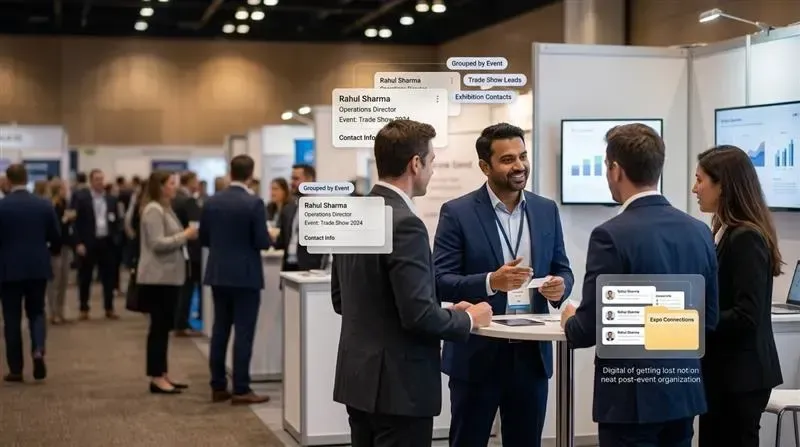
He attended with energy, met the right people, had useful conversations, exchanged visiting cards, and saved new contacts throughout the day. While he was at the exhibition, it always felt like something valuable was building.
The real problem started after he returned home.
Within a few days, daily work took over again. Meetings resumed. Client work moved back to the front. Operational tasks became urgent. What had felt important during the event quickly became something he planned to come back to later.
That delay kept repeating.
The leads were not bad. The event had not failed. But the momentum created during the trade show rarely survived the week after it ended.
Some contacts got mixed into his regular phonebook with no event context. Some business cards stayed in bags or on desks. Some conversations were remembered, but not clearly enough to know who should be contacted first.
The issue was not collecting leads.
The issue was what happened after the event.
After attending four trade shows, he realized the same pattern was repeating. He was doing the work of showing up, meeting people, and creating opportunities, but once he came back, those contacts no longer stayed visible in a useful way.
The value was being created at the event.
It was just not being carried forward afterward.
 Pharma Sales